Valle de la Luna (Moon Valley) Tours from San Pedro de Atacama
See prices From 70 EUR · Free cancellation available
Contents
A valle de la luna tour is the single most booked excursion out of San Pedro de Atacama, and it earns that spot honestly. In a few hours you walk through salt and sand formations that genuinely look lunar, each one shaped by wind and ancient lake sediment inside the Cordillera de la Sal. I would send almost any first time visitor here before any other Atacama excursion, and I will explain exactly which version of the tour to book below.
There are three real ways to see this valley: a standard group tour that covers the highlights across a few hours, a sunset tour built entirely around the evening light, and an e-bike tour for travelers who would rather cover the ground themselves. Picking between those three formats matters more than picking a specific operator, so that is where I will start before getting into what you will actually see once you are inside the park.
Price, duration and what is actually included vary more between San Pedro de Atacama’s nine tours than most listings make obvious, and it is worth checking what every San Pedro de Atacama tour includes before you book so a valle de la luna tour fits properly into the rest of your trip.
What Makes Valle de la Luna Worth a Tour?
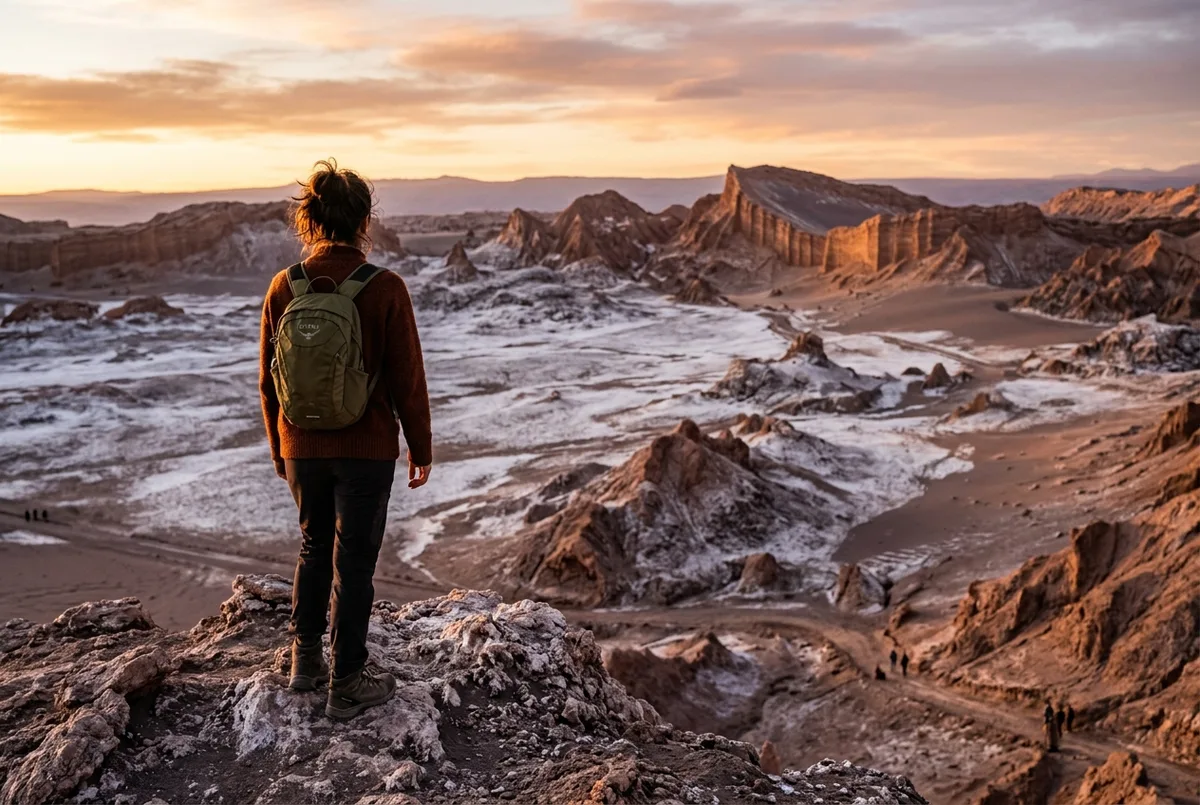
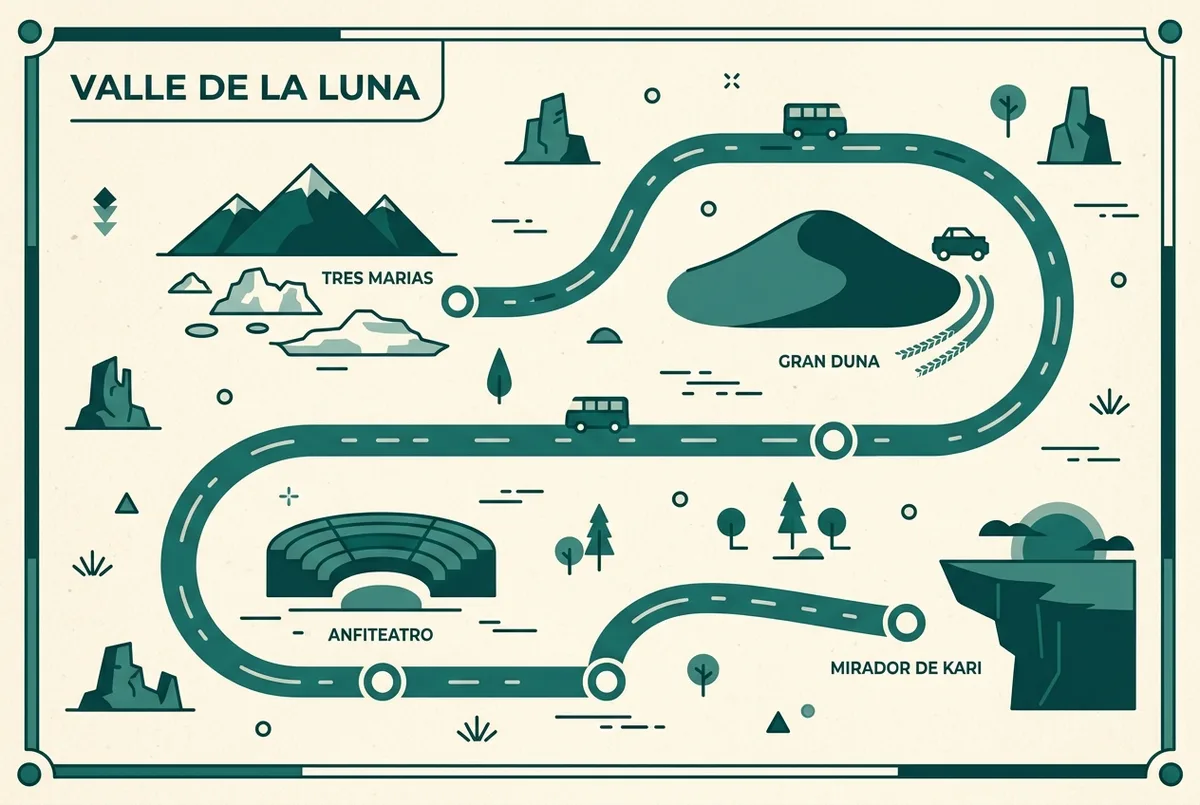
Valle de la Luna earns its name honestly. Wind and an ancient lake bed carved the Cordillera de la Sal into dunes, ridges and canyons that look genuinely otherworldly, especially once low sun throws long shadows across the salt crust. Three formations do most of the work here: the Tres Marías, a cluster of wind sculpted salt pillars, the Gran Duna, a towering dune you can climb for a wide view across the valley floor, and the Anfiteatro, a natural amphitheater of folded rock that shows just how much pressure built these layers over millions of years.
I think the valley rewards a guide more than most Atacama excursions, simply because so much of what makes it special, the geology, the timing of the light, the names of each formation, is easy to miss walking through on your own. A good guide turns a short walk among rocks into an actual geology lesson, and that is worth paying for here even if you would skip a guide somewhere else in the desert.
The valley sits inside the Los Flamencos National Reserve, a protected area that covers several of the desert’s most distinctive landscapes, Valle de la Luna among them. That protected status is part of why the park manages entry through a set fee and set hours rather than leaving the site open and unmanaged, which keeps the formations in better shape than they would be under unrestricted foot traffic.
Check prices & dates
Ready to visit?
Book your tickets in advance: popular time slots sell out.
Should You Book the Standard Tour or the Sunset Version?
I would book the sunset version almost every time. The same rocks that look flat and pale at midday turn gold, then deep red, as the sun drops toward the horizon, and that shift in light is really the whole point of visiting. A standard daytime tour still covers the same stops, just without the payoff at the end.
My honest take: the only reason to choose the daytime version over the sunset one is if your schedule simply will not allow an evening excursion, or if you specifically want more time to wander at your own pace rather than hit a handful of timed viewpoints. My Valle de la Luna sunset guide walks through exactly what that evening timing looks like and which viewpoints catch the best light.
Is This the Same Valle de la Luna as the One in Bolivia?
No, and this trips up more travelers than you would expect. Several places around the world share this name, including a well known site near La Paz, Bolivia, and a similarly nicknamed landscape in Argentina’s San Juan province. The valle de la luna tour covered on this page visits the version in Chile’s Atacama Desert, just outside San Pedro de Atacama.
I would double check which one shows up in your search results before you book anything, since the tours, prices and even the geology are completely different between them. My full breakdown of every Valle de la Luna sorts out which is which if you are not sure yet which one you actually mean.
What Will You Actually See Inside the Valley?
Every tour format moves through roughly the same set of landmarks, just at a different pace and time of day. You will walk among the Tres Marías early in the visit, since it is the most photographed spot and guides time it to beat the biggest crowds. From there, most tours move to a quieter overlook away from the main pull offs before finishing at Mirador de Kari, also called Piedra del Coyote, the valley’s main sunset viewpoint.
I would budget real time at each stop rather than rushing through for photos alone. The Gran Duna and the Anfiteatro both reward a few extra minutes of just standing still and looking, something that is easy to skip when you are thinking about the next stop on a fixed schedule. My photo spot guide breaks down which viewpoint photographs best at which time of day if that is part of why you are visiting.
What Is the E-Bike Tour Like Compared to the Van?
An e-bike tour trades the comfort of a van for covering the desert yourself, at your own pace, with the electric assist doing most of the work on the harder stretches. It suits an active traveler who wants to feel the desert rather than watch it through a window, but it also means more sun exposure and more physical effort than sitting in a vehicle between stops.
My honest read: I would only recommend the bike version to someone who is already comfortable cycling and has had at least a day to adjust to San Pedro de Atacama’s altitude. For a first evening in town, or for anyone who just wants the views without the effort, the standard or sunset van tour is the easier, lower risk choice. My cycling guide goes deeper into fitness level and heat considerations if the bike option still appeals to you.
How Much Does a Valle de la Luna Tour Cost?
A standard sunset tour runs from around EUR 70 per person for round trip transportation and a bilingual guide, with the park entrance fee itself sometimes included depending on when you book. That entrance fee is a separate line item from the tour price, set and collected by Chile’s forestry service, and it is adjusted periodically on its own schedule, so treat any figure you read as a snapshot rather than a fixed number.
I would always check exactly what is included before comparing two listings on price alone, since one tour’s EUR 70 that bundles the entrance fee is a better deal than a cheaper listing that does not. My entrance fee and hours guide breaks down the current fee structure and what a booked tour saves you versus paying at the gate yourself.
Do You Need a Guide, or Can You Visit on Your Own?
You can visit independently with a rental car and your own entrance ticket, but I would not recommend it for a first visit. The park’s turns are not always clearly marked, the best light lasts only about twenty minutes at sunset, and a guide knows which pull offs fill up early and which stay quiet.
My honest take: independent visits suit returning travelers who already know the valley and specifically want to linger somewhere longer than a group schedule allows. For everyone else, I think the guide earns their fee here more than on almost any other Atacama excursion, simply because timing matters so much to the whole experience.
When Should You Visit for the Best Light?
Late afternoon into early evening, which is exactly what the sunset tour is built around. The light shifts fastest in the final thirty minutes before the sun drops behind the Cordillera de la Sal, moving from gold to a deep red across the salt formations as the shadows stretch out across the valley floor.
I would not try to chase this light on a midday visit, no matter how good the weather looks. The desert’s dryness means the sky stays clear most days, but the quality of light still depends entirely on the sun’s angle, and midday simply does not deliver the same effect no matter how clear the sky happens to be that day.
Is Valle de la Luna Safe for Kids and Older Travelers?
Generally yes, with a caveat on terrain rather than altitude. The valley floor sits around 2,400 meters, considerably lower than the altiplano excursions elsewhere in the desert, so altitude is rarely the limiting factor here. The stops themselves involve short walks over loose sand and salt crust without paved paths, which can be slow going for anyone with mobility issues.
I would bring closed shoes for kids and older travelers alike, since sandals do not grip the salt crust well. Wheelchair users should look elsewhere in the desert for a flatter excursion, since none of the main viewpoints here have paved access, and the ground gets noticeably uneven near the Tres Marías in particular. I would also pace the walk between stops a little slower than a guide’s default rhythm if anyone in your group tires easily, since nobody loses anything by taking the sandy sections at an easier pace.
How Does This Compare to Chile’s Other Desert Landscapes?
Valle de la Luna covers one specific landscape extremely well, but it is only one piece of what the Atacama Desert offers. The altiplanic lagoons and salt flats further from town show a completely different side of the region, with turquoise water against white salt crust rather than the dry salt mountains you see here, and they sit at a noticeably higher altitude that usually needs a day or two of acclimatization first.
A real jacket rather than a light layer, since the desert cools fast once the sun drops during a sunset tour. Closed shoes help on every format, van, sunset or bike, since several stops involve loose sand and salt crust that sandals do not grip well. Sun protection matters just as much during the day: strong sun, high altitude and dry air combine to burn skin faster than most travelers expect, even on a cool looking afternoon.
I would also charge your camera or phone fully beforehand if you are going for the sunset version specifically. Cold batteries drain faster once the temperature drops at the final viewpoint, and this is exactly the kind of landscape visitors regret under photographing once they are back home and going through their photos.
How Long Does a Valle de la Luna Tour Actually Take?
Most formats run around four to five hours door to door, including pickup and drop off at your accommodation in San Pedro de Atacama. The sunset version tends to sit at the longer end of that range, since the group arrives early enough to catch the quieter stops before the light peaks, then waits out the full color shift at the final viewpoint before heading back.
I would not try to squeeze this into a tight evening around another booking. The whole appeal depends on not rushing the final twenty or so minutes at Mirador de Kari, and a tour that feels rushed there loses most of what makes it worth doing in the first place.
Is Valle de la Luna Included in Any Multi-Day Combo?
Yes. Several multi-day Atacama packages bundle a Valle de la Luna visit alongside other landscapes, such as the altiplanic lagoons or the geyser field, into one combined itinerary rather than booking each day separately. The site’s own three-day combo tour runs from EUR 240 and folds a Moon Valley day in alongside two other full days, if you would rather lock in a whole trip at once.
My honest take: I would only go the combo route if you already know you want every landscape it covers. If Valle de la Luna is the one excursion you actually care about, booking it on its own gives you more control over which day and which time slot you get, rather than accepting whatever order a fixed multi-day itinerary assigns it.
My Honest Recommendation
For a first visit, I would book the sunset tour over the standard daytime version almost without exception, since the light really is the whole reason this valley has the reputation it does. Save the e-bike option for a later trip, or for a day when you are already comfortable with the altitude and want a more physical outing. Whichever format you choose, bring warm layers and closed shoes, and budget real time at the Tres Marías and Mirador de Kari rather than rushing between stops. If you are still deciding how this fits into a longer trip, it is worth browsing every Atacama tour and ticket this site compares before you commit to a full schedule. For the official word on current entrance fees and park rules, CONAF, Chile’s forestry service, is the reliable source to check directly before you travel.
Frequently Asked Questions
Is a valle de la luna tour worth it if I only have one evening in San Pedro de Atacama?
Yes. The sunset version runs about 4.5 hours, which fits comfortably into a single evening without reshuffling the rest of a short trip.
Do I need to book the sunset tour, or is the daytime version just as good?
The daytime version covers the same stops but misses the light that makes the valley look genuinely lunar. I would pick the sunset tour unless your schedule truly will not allow it.
Is the entrance fee always included in the tour price?
Not always. It depends on when you book, so check your specific listing rather than assuming either way before you pay.
Can I bring a drone to photograph the valley?
No. Drones are not permitted inside the park on any Valle de la Luna tour, sunset, standard or e-bike.
Is this the same place people mean when they search Valle de la Luna Bolivia?
No, that is a different site near La Paz. This page covers the Valle de la Luna in Chile’s Atacama Desert, outside San Pedro de Atacama.