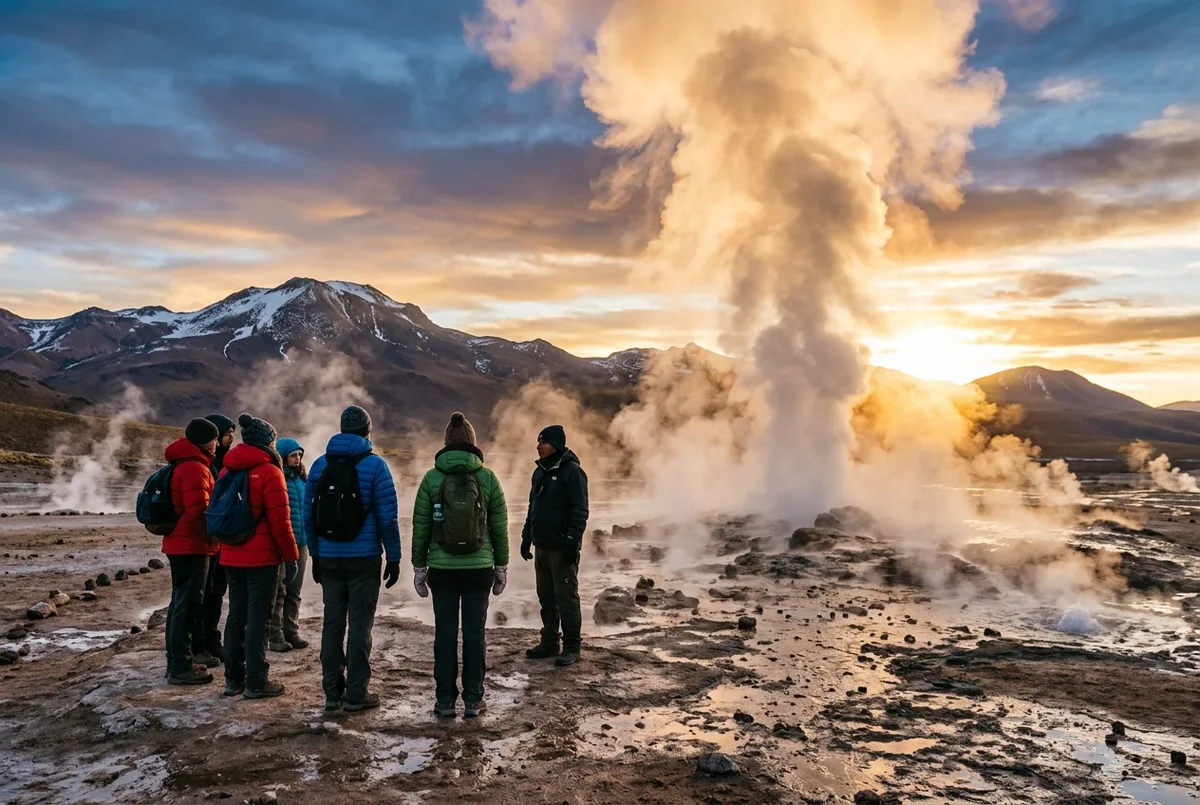
An el tatio geysers tour gets you to one of the largest geyser fields on Earth at the one moment it actually looks the part: sunrise, before the thin highland air warms enough to make the steam columns fade. That means a wake up well before dawn, a climb to roughly 4,300 meters, and a return to San Pedro de Atacama by late morning.
I will walk through why the timing is non negotiable, what the drive and the altitude actually feel like, and which parts of this trip you can control versus which ones you just have to accept as the cost of the view. If you are deciding where this tour fits against the rest of your trip, it is worth sorting every San Pedro de Atacama tour by how early it starts before you commit to a full schedule, since this is one of the earliest wake ups on the whole list.
Why Does El Tatio Require Such an Early Start?
Because the steam effect that makes the geysers look dramatic only exists in a narrow window right after sunrise, when near freezing night air meets the ground’s residual geothermal heat. Once the sun climbs and the air warms, the same vents keep bubbling, but the visible steam columns largely disappear.
I would not try to negotiate this with yourself. There is no later departure time that gets you the same photo, so the question is not whether to leave early, it is whether this specific experience is worth the wake up to you. My honest take is that it is, but I would not pretend the alternative exists.
How High Up Is El Tatio, and Does Altitude Actually Matter?
El Tatio sits at roughly 4,300 meters above sea level, well above San Pedro de Atacama’s own 2,400 meters, and the jump matters more than most visitors expect on a day trip. You are not staying at that altitude long, but you are exerting yourself in cold, thin air on very little sleep, which is a real physical stress even for fit travelers.
My honest advice: spend at least a day or two in San Pedro before booking this tour rather than scheduling it for your first morning in town. Acclimatizing at the lower elevation first genuinely changes how this trip feels, and I would not skip that step just to fit everything into a short visit.
What Actually Happens on the Tour, Start to Finish?
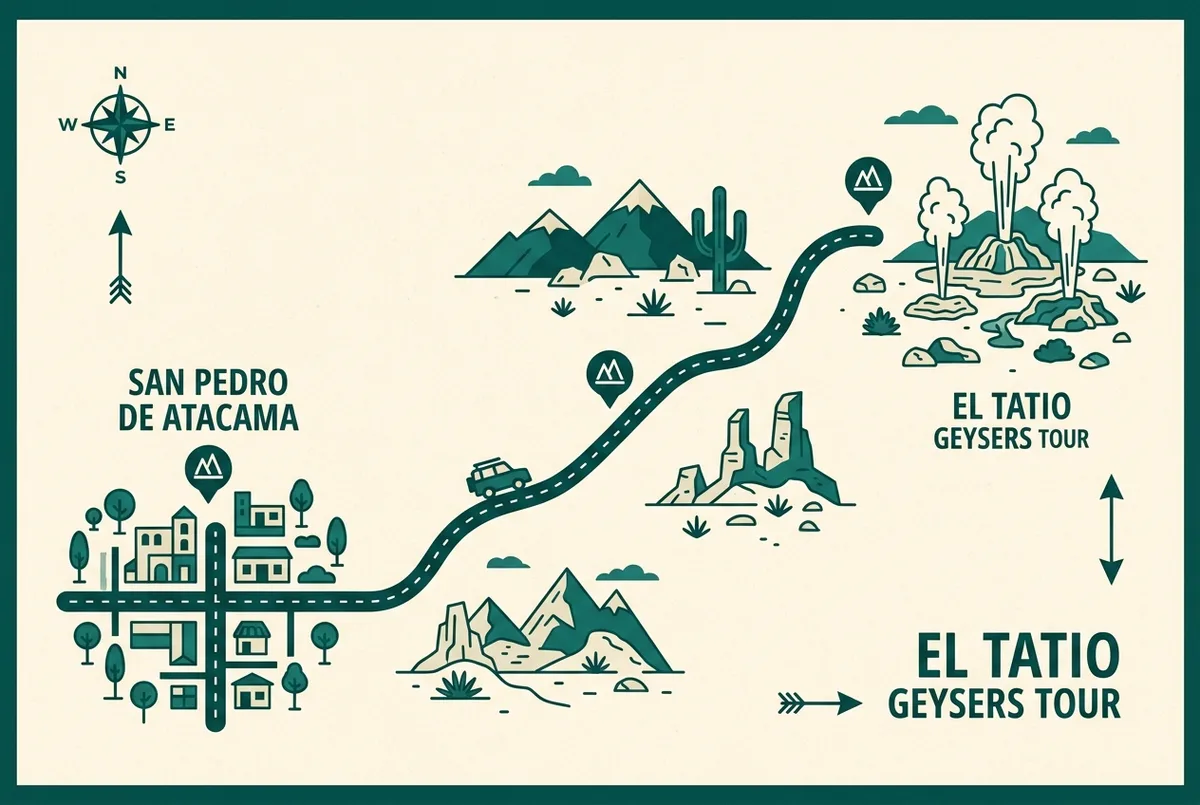
Pickup happens from your accommodation in San Pedro de Atacama, often around 4am, and the drive climbs steadily for roughly an hour and a half to two hours toward the geyser field. The group arrives as the first light hits the steam columns, which is the entire reason for the early start, before moving to a more sheltered spot for a packed breakfast while the sun climbs higher.
The return route is not a straight drive back. Most tours pass through high altitude wetlands fed by geothermal runoff, home to flamingos and other altiplano birds, and stop briefly in Machuca, a small settlement known for its handful of adobe buildings and a centuries old chapel. My take: this return leg is an underrated part of the trip, and I would not treat it as just the drive home.
Is El Tatio the Largest Geyser Field in the World?
It is the third largest geyser field in the world and the largest in the Southern Hemisphere, with roughly 80 active geysers spread across the site. It is not the single largest field on Earth, that distinction belongs to Yellowstone, but the altitude and the scale here still make it a genuinely significant geothermal landscape.
I would not let the “third largest” framing undersell the experience. What makes El Tatio memorable is less about raw ranking and more about standing at nearly 4,300 meters watching dozens of steam columns catch the first light at once, which is not something most travelers have seen before.
What Does the Ticket Price Actually Include?
A booked el tatio geysers tour typically bundles hotel pickup and drop off, an English speaking guide, transportation, a packed breakfast, and the park entrance ticket itself into one price, from around EUR 72.34 per person for the roughly 7 hour round trip. Confirm the exact figure and inclusions with your operator before you book, since prices are reviewed periodically rather than fixed.
My honest read: the entrance ticket arrangement is worth double checking on your specific booking, since some operators still require it to be paid in cash or by card at the gate rather than folded into the tour price in advance. My tickets and entrance fee guide breaks this down in more detail if you want the specifics before you pay.
Can You Visit El Tatio Independently, Without a Tour?
Technically yes, with a rental car and your own entrance ticket, but I would not recommend it for most visitors. The unpaved high altitude roads are genuinely difficult to navigate in the dark on your own, and the margin for error, both on the drive and around the altitude itself, is higher than on almost any other Atacama excursion.
I would only consider the independent route if you already have real experience driving unpaved mountain roads at altitude and a vehicle actually rated for it. For everyone else, a guide who knows the route and the timing removes a genuine safety variable, not just a convenience one.
Why Do the Geysers Fade as the Morning Goes On?
The visible steam column depends on a sharp temperature difference between the near freezing morning air and the geothermally heated water and ground beneath it. As the sun rises and the surrounding air warms, that contrast shrinks, and the same geysers that looked dramatic at sunrise produce far less visible steam by mid morning.
I would not feel shortchanged if you are told the tour ends earlier than you expected. Lingering past the point where the steam has mostly faded does not add much to the experience, and most guides time the departure to make the most of the window rather than waste it.
What Should You Pack for the Cold?
Real cold weather layers, not just a light jacket, since temperatures at the field commonly sit well below freezing at sunrise and you will be standing outside for close to an hour before breakfast offers any real chance to warm up. Gloves and a hat matter more here than on almost any other Atacama tour.
My weather and packing guide goes deeper into layering strategy and a note on lens fogging if you are bringing a camera, since this is a genuinely different cold than anything else on a standard Atacama itinerary.
Is El Tatio Safe for People With Health Conditions?
Operators generally advise against this tour for anyone with heart problems, high blood pressure, or respiratory conditions, since the combination of extreme altitude and near freezing cold is a real physical stress, not a minor inconvenience. I would take that advice seriously rather than assume it is overly cautious boilerplate.
My honest take: if you are uncertain about your own fitness for this specific combination of cold and altitude, talk to a doctor before booking rather than finding out on the mountain. This is also not a tour I would book for very young children, since the early wake up and the cold are hard on anyone.
How Does El Tatio Compare to Other Atacama Day Trips?
El Tatio asks more of you, in wake up time and altitude, than almost any other single day excursion out of San Pedro de Atacama. The payoff is a landscape and a visual effect you genuinely cannot replicate anywhere else nearby, but I would not book it as your very first outing in the desert if you have a choice.
If the early start and the altitude feel like too much for where you are in your trip, my Moon Valley sunset tour guide covers a similarly dramatic landscape at a far more forgiving elevation and time of day. If multi day logistics across several highland excursions sound appealing instead, my Uyuni Salt Flat tours guide covers the bigger overland trip that some travelers pair with a shorter Atacama stay.
Should You Do This Tour Early or Late in Your Trip?
I would place it after at least one full rest day in San Pedro de Atacama, not on arrival day and not as your absolute last activity before a long travel day home. Giving your body a day to adjust to the town’s own 2,400 meter elevation first makes the jump to 4,300 meters noticeably more manageable.
My honest advice: if you are building a longer Atacama itinerary around multiple excursions, sequence this one deliberately rather than slotting it in wherever there happens to be a gap. My Atacama itinerary guide covers how to pace El Tatio against the desert’s other major excursions without overloading any single day.
What Time Should You Actually Expect to Be Back in San Pedro?
Most tours return by late morning or early afternoon, which leaves the rest of the day technically free, though I would not plan anything demanding right after. Most visitors use the afternoon to rest, both from the early wake up and from the altitude, rather than squeezing in a second activity the same day.
I would build your schedule around that reality rather than fight it. My sunrise timing guide covers exactly why the pickup time sits where it does, and why reframing the early start as the whole point makes the wake up easier to accept.
What Wildlife Might You See Along the Way?
The wetlands fed by geothermal runoff on the return route are genuinely good for birdlife, and I would keep your camera out for the drive back rather than putting it away once the sunrise shots are done. Flamingos and other altiplano birds use these high altitude wetlands regularly, drawn by the warmer water the geothermal activity produces even at this elevation.
My honest take: this stretch of the trip gets overlooked because everyone is mentally done after the geysers, but it is a real highlight in its own right. I would treat the Putana wetlands stop as a second act rather than a formality on the way home, since the light by this point in the morning is softer and easier to shoot than the harsh midday sun later on.
How Does Group Size Affect the Experience?
Smaller groups generally move faster between stops and give you more room at the viewing platforms during the narrow window when the steam is at its best, which matters more here than on a relaxed daytime excursion. A large group arriving at the same vent at once can genuinely cost you several of those limited minutes.
I would ask about typical group size when you book if this matters to you, since operators vary noticeably here. My honest read is that a smaller group is worth paying a bit more for on this specific tour, more so than on most of the desert’s other excursions, simply because the visual payoff is so time boxed.
What If the Weather Doesn’t Cooperate?
Cloud cover or wind can mute the steam effect somewhat, though the Atacama’s dry climate means a fully washed out morning is uncommon compared to most other geyser destinations around the world. I would not cancel a trip over a slightly overcast forecast, since the geothermal activity itself does not depend on clear skies the way the light does for photography elsewhere in the desert.
My honest advice: go in with realistic expectations rather than assuming every sunrise here looks identical to the best photos you have seen online. Even a slightly muted morning at El Tatio is still a genuinely rare sight, and I would not let a forecast talk you out of booking.
Is El Tatio Worth Doing If You Are Only in San Pedro for a Short Trip?
It depends on what you are willing to trade. If you only have two or three days total, giving up a full morning plus a recovery afternoon to El Tatio is a real cost against your limited time, and I would weigh that honestly rather than assume every excursion fits into a short visit equally well.
My honest take: on a short trip, I would rather see one or two excursions properly, with real rest days between them, than cram in every single highland tour back to back. If El Tatio is the one landscape on this list you most want to see, build the rest of a short itinerary around protecting that one early morning rather than squeezing it in as an afterthought.
My Honest Recommendation
Book this tour after at least one rest day in San Pedro, pack real cold weather layers, and accept the early wake up as the price of a sunrise you cannot get any other way. Confirm your specific booking’s entrance fee arrangement before you travel, and do not schedule anything demanding for the rest of that same day. If you are comparing this against the desert’s other excursions before deciding what fits your trip, every San Pedro de Atacama tour and ticket is worth a look, and the El Tatio Geysers tour itself is the direct booking path once you are ready.
Frequently Asked Questions
What time does an el tatio geysers tour actually leave?
Pickup is typically around 4am, since the group needs to reach the field before sunrise while the steam effect is still visible.
How high up is the El Tatio geyser field?
Roughly 4,300 meters above sea level, considerably higher than San Pedro de Atacama’s own 2,400 meters.
Do I need to acclimatize before booking this tour?
I would spend at least a day or two at San Pedro’s lower elevation first rather than booking this on your first morning in town.
Is breakfast included on an El Tatio Geysers tour?
Yes, a packed breakfast is typically served on site once the initial sunrise viewing is done.
Is the tour safe if I have a heart or blood pressure condition?
Operators generally advise against it for anyone with heart problems, high blood pressure, or respiratory conditions, given the combined altitude and extreme cold.